Research & Insights

In our contribution to the NYU Abu Dhabi Transition Investment Lab's annual report, in particular on the theme "Understanding Inequality as a Systemic Risk to Financial Markets and Portfolios", our Executive Director, Delilah Rothenberg, makes the case that inequality has earned its place alongside climate and nature as a defining systemic risk of our time. Modern finance has not yet developed the analytical tools that enable diversified investors to adequately factor externalized social costs into their risk-return analysis. As a result, it's increasingly unclear whether markets can facilitate the price discovery needed to reflect the true value of human, social, and natural capital.
Read More
This article is a preview into a forthcoming report that examines how economic inequality is emerging as a systemic threat to the economy and financial markets, paralleling the recognition climate change and biodiversity loss have already received. The report will include additional analysis and citations. We are grateful to the Transition Investment Lab for their feature of this work.
Read More
We are in the polycrisis and a time of deep uncertainty, where the reliability of predictive models based on history is being called into question, and where new ways of thinking are essential to address the complexity of interconnected systems. After six years we have a strengthened conviction that our original thesis is correct – to address the polycrisis, we must co-create solutions together with stakeholders from all walks of life. And to do this, we must address economic inequality and rising polarization.
Read More
In this blog, PDI's Raphaele Chappe and Delilah Rothenberg challenge a foundational assumption underlying monetary policy: that wages are the primary driver of inflation. Drawing on the concept of "plutonomy" — economies where wealth and consumption are heavily concentrated among the affluent — they examine how the growing dominance of high-income households in aggregate demand may be fueling sector-specific inflation in housing, education, and healthcare, while simultaneously undermining the effectiveness of traditional policy tools like interest rate adjustments. The piece argues that for investors, central banks, and policymakers, understanding who is driving demand — and where that demand is concentrated — is essential to managing systemic risk and advancing more resilient, broad-based economic growth.
Read More

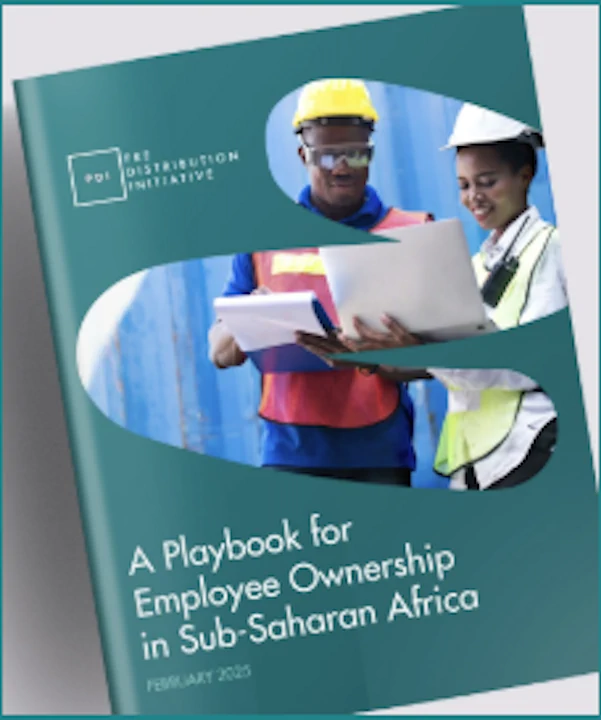
This Playbook provides an analytical approach to advancing employee ownership (EO) across seven countries in the sub-continent, offering insights that can be adapted to other EMDEs where EO remains underutilized. The Playbook highlights the potential of EO to create more inclusive and resilient economies, particularly in emerging markets where wealth concentration and economic inequality remain pressing challenges from within and across countries. By giving workers a direct stake in the success of the businesses they help build and sustain, EO can drive long-term prosperity, improve business performance, and strengthen communities.
Read More
An iterative blueprint for capital market actors, policymakers, and regulators to explore how capital markets can play a transformative role in building a regenerative and inclusive economy by realigning financial value with real-world value.
Read More
The Financing for Development Addis Ababa Action Agenda calls for increased private finance, debt sustainability, and an enhanced focus on addressing systemic issues and financial stability to support economic growth in Emerging Markets and Developing Economies (EMDEs). However, barriers to adequately priced capital for EMDEs remain high.  This session explored the proposition that, in order to incentivize sustainable investment in EMDEs at scale, investors need to understand the systemic and/or systematic risks of not allocating such capital. Significant research has been conducted on the overlooked opportunity of investing in these markets. However, according to dominant market interpretations of risk, investors typically believe they can achieve comparable or stronger returns in developed markets with less risk than EMDEs.
Read More
This paper, in which the Predistribution Initiative contributed, considers the different mechanisms through which socio-economic inequality can affect financial markets and the private sector, as well as the incentives for participants interested in reducing socio-economic inequality.
Read More
As part of the Sorenson Global Impact Leaders, our Executive Director, Delilah Rothenberg contributed to the "What’s Next in Impact?" report where thought leaders and impact practitioners share suggestions on how we can work together to achieve a sustainable, resilient, and thriving future.
Read More

How workers sit at the heart of long-term value creation, and the case for multistakeholder governance and ownership 

Sustainable Finance Geneva - Interview of the Month

Women Changing Finance podcast - How investment structures can reduce inequality and build long-term resilience

New Private Markets podcast - How can investors better understand and address inequality as a systemic risk?

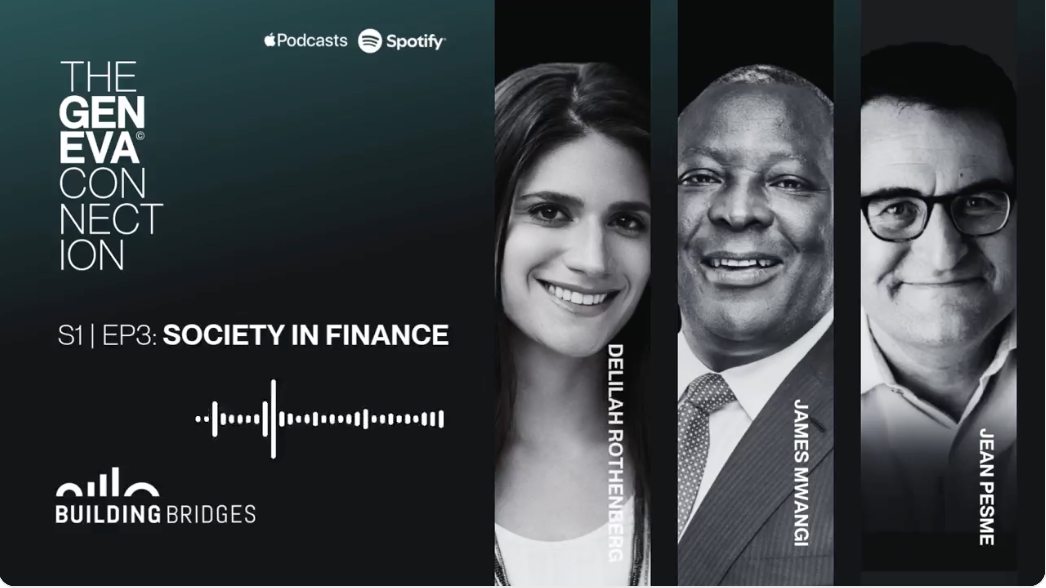
The Geneva Connection - Society in Finance: Bridging Gaps, Shaping Futures

Value Creation Through Responsible Investing: NYU Stern Center for Sustainable Business Private Equity Sustainability Practicum: Value Creation Through Responsible Investing

Virtual Launch of the Taskforce on Inequality and Social-Related Financial Disclosures (TISFD)

Perspectives on Workforce Directors: Opportunities & Challenges

Accelerator for Systemic Risk Assessment (ASRA)- From Multidimensional Challenges to Multidimensional Possibilities: Facing Global Risks Together

UNRISD - Opportunities and Challenges for Integrating Thresholds and Allocations into Measurement and Management Frameworks

The Mindful Marketplace: Neighborhood Economics - Redefining Wealth Distribution with Innovative Financial Models

American Evaluation Association's Social Impact Measurement Topical Interest Group: Using a system lens to assess impact