Predistribution
Traditional approaches to address economic inequality are insufficient. A society without good jobs, without small businesses, and without thriving rural areas lacks dynamism and leaves workers, communities, and consumers dependent on handouts from the wealthy in the form of philanthropy, and/or top-down taxes and government transfers. This imbalance plays out in societal decision-making, with the wealthy and larger businesses and investors having disproportionate influence.
Taxes help level the playing field and fund infrastructure and a safety net, but we must also fix the imbalanced economy that led to such concentrated wealth in the first place - that is the meaning of Predistribution.

Predistribution in a Nutshell
Predistribution involves building fairness into our economy from the ground up, so that people don’t have to be dependent on redistribution (donations and government assistance) after production cycles. It addresses root causes of inequality through better valuing people and nature in order to create broad-based prosperity.
Predistribution:
- Reduces inefficiencies in markets that create dependencies on post-production transfers like government assistance and philanthropy
- Builds agency, dignity, and respect across workers and communities globally
- Strengthens resiliency of markets, economies, governments, and societies

This includes approaches like:
- Paying living wages
- Opportunities for employees and communities to own equity alongside investors and executives in companies and projects
- Multi-stakeholder boards of directors, such as including workers or workforce representatives on boards
- More adequately priced capital for small-and-medium sized enterprises (SMEs) and economically overlooked regions
- Citizens assemblies, for instance with pension funds and their beneficiaries
- Freedom of association, collective bargaining, and grievance mechanisms

These changes can be systemically unlocked via:
- Changes in accounting and financial analysis to better value workers, communities, consumers, and nature (human, social, and natural capital)
- Evolved incentives for investment teams of large diversified asset allocators (e.g., pension funds, sovereign wealth funds, endowments) to prioritize long-term value creation; this may include reformed financial benchmarks to evaluate performance and longer-term performance review periods

Predistribution in Action
As we highlight with our partners at Oxfam America in "Getting Ahead of the Curve in Dynamic Materiality,” the opportunity for investors to partner with workers and communities and align incentives accordingly ultimately supports rather than erodes long-term financial and economic value.
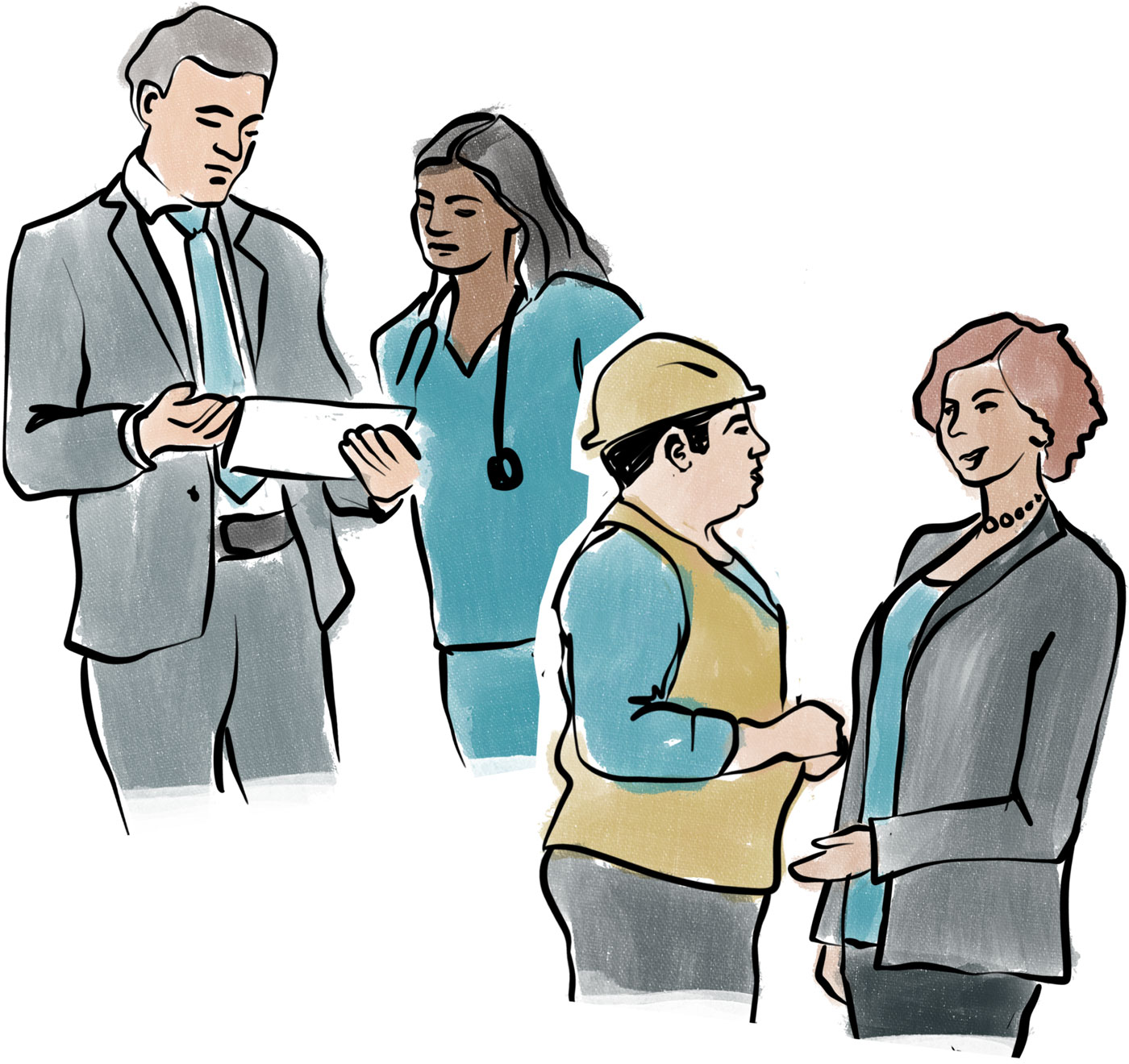
Imagine if today’s corporate boards of directors had representation beyond investors:
- Healthcare companies have a patient advocate on the board of directors, alongside doctors, nurses, and other experts closest to the issues
- Infrastructure companies have community representation on their boards
- Aviation companies have worker and consumer advocates on their boards
- Workers in all of these companies are paid both a living wage where feasible and participate in the equity appreciation of the business as it grows alongside executives and investors
Join us in building a Predistributive economy!
We believe the future must be co-created together with workers, consumers, communities, small and large businesses, and investors of all kinds across geographies. At a time of rising disenfranchisement and the advent of artificial intelligence, there is a narrow window to shift the system before it becomes more deeply entrenched.
Your voice matters! Tell us what you are seeing and what can change. Join us on the ground level in building an economy where wealth and power are more fairly shared from the start.