Our Work
We work with investors to help them understand and reform their approaches considering:
- The impact of capital flows. The way investors allocate, price, and structure capital may — even unintentionally — contribute to market concentration and economic inequality, undermining workers, consumers, and communities. These negative impacts manifest as negative externalities in the economy which can accumulate into systemic risks in the financial system and investors' diversified portfolios.
- The value of human, social, and natural capital. Better valuing and accounting for people and nature and considering externalities for better decision-making can shift the economy from a fragile system that undercompensates workers and communities for the risks they take and the value that they create to a resilient one that better serves society.
- The power of inclusive governance and ownership. Involving workers, consumers, and communities in the governance and ownership of companies—alongside executives and investors—can improve firms' financial performance, contribute to robust markets, reduce economic inequality, bridge divides, and restore trust in institutions.

Why do we focus on institutional investors?
The financial system is like the economy's plumbing—it influences where money flows and what gets funded. A number of large institutions—pension funds, insurance companies, and investment firms—now control about half of all global financial assets. These powerful institutions influence where capital flows, how companies are governed, and how our economy operates through investment decisions that affect everything from job creation to consumer health to conservation of nature.
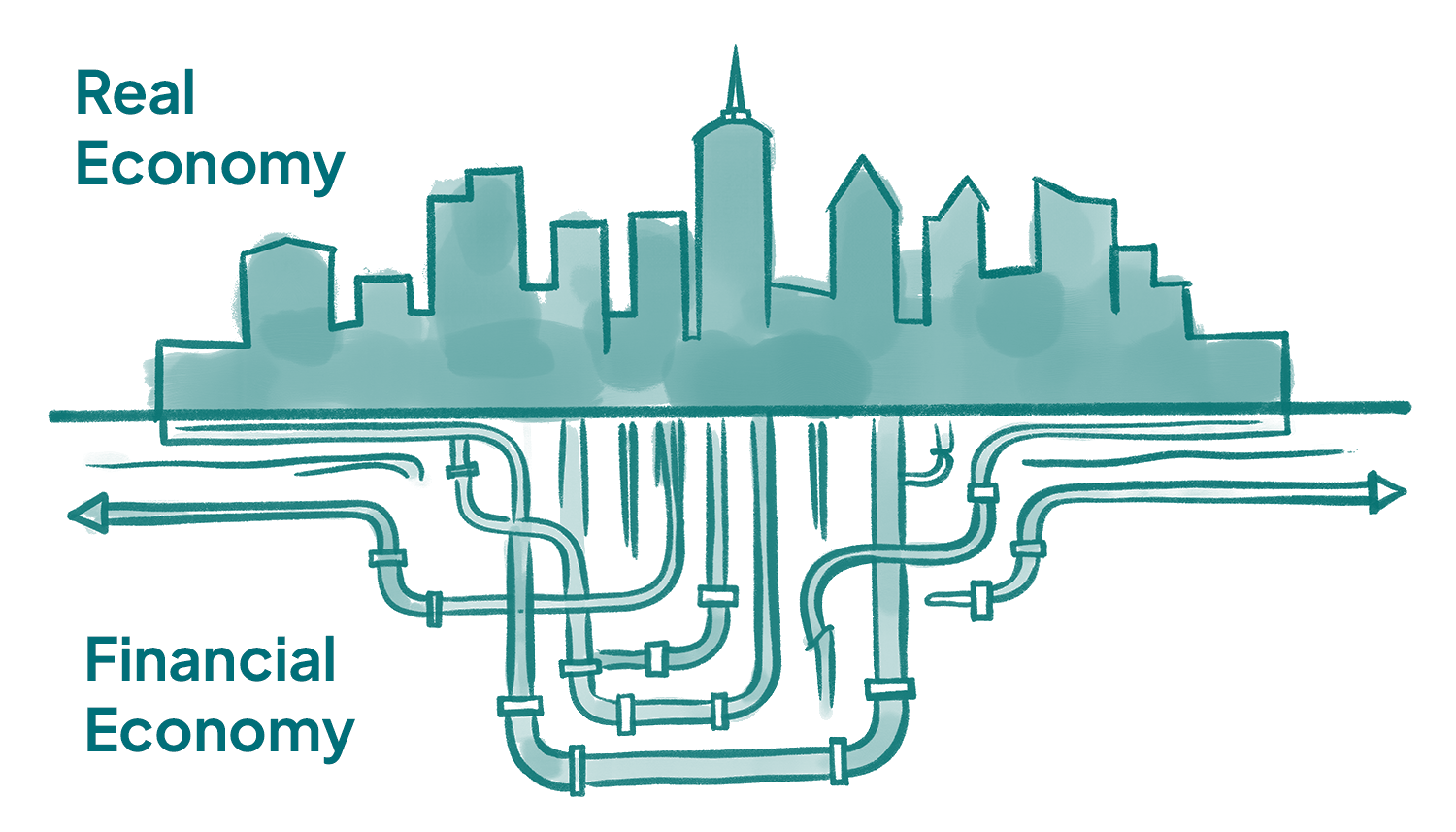
The current system remains anchored in a decades-old paradigm that prioritizes shareholder influence over other vital stakeholders, such as workers, consumers, and communities. This causes societal fragility, which eventually destabilizes markets, as well.
By playing a role in influencing how these financial institutions evaluate and make investments, as well as how they measure success, workers, communities, and consumers can course-correct the enormous power of capital markets toward building an economy that works for everyone—creating good jobs, building small businesses, revitalizing economically distressed communities, narrowing economic inequality, and tackling the challenges that matter most to our shared future.
We believe capital markets can—and must—serve the long-term prosperity of people, communities, and the planet.
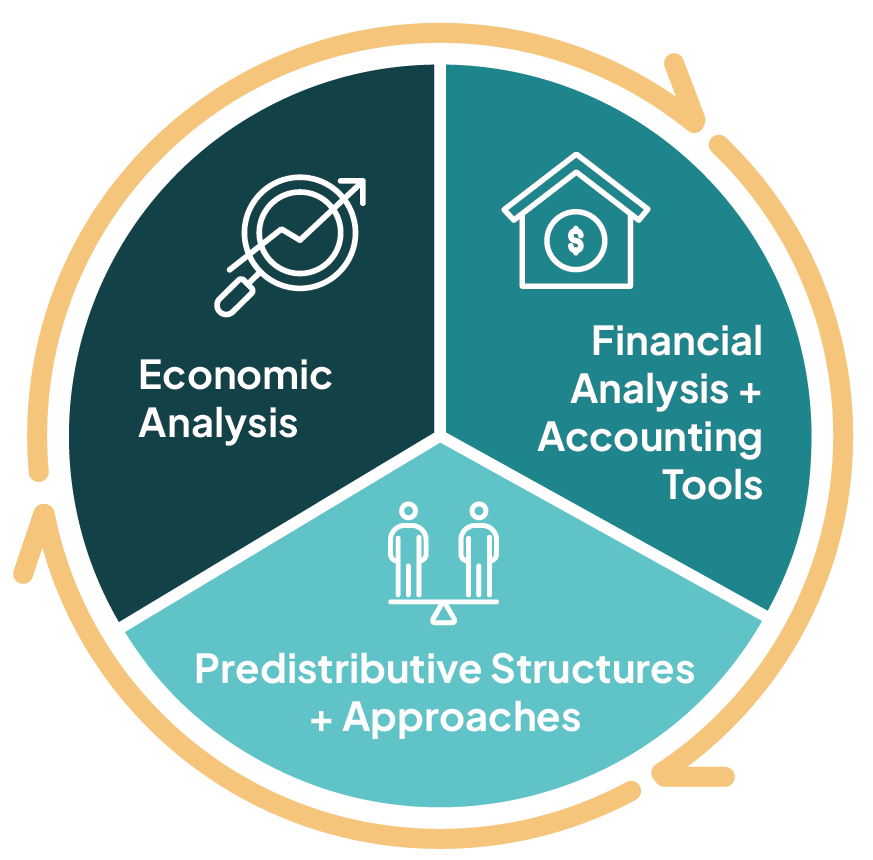
To get there, we focus on three interconnected levers for change.
Economic Analysis
This lever examines how investment decisions shape wealth distribution, analyzing both what drives inequality and how inequality feeds back into financial instability. This workstream establishes the foundational case for why current financial practices produce unequal outcomes and create systemic risks that affect even diversified portfolios.

Financial Analysis + Accounting Tools
This lever translates these economic insights into reformed valuation methodologies that properly account for human, social, and natural capital alongside financial capital. By changing how we measure value and risk, this workstream creates the analytical foundation and investor incentives needed to support alternative structures, working through partnerships to ensure these tools reflect stakeholder perspectives rather than top-down mandates.

Predistributive Structures + Approaches
This lever operationalizes the reformed analytics by advancing concrete mechanisms—broadened equity-linked compensation and profit sharing, multi-stakeholder governance, living wages, and better capital access for SMEs and overlooked regions—that distribute risk, return, and influence to those who create value. This workstream demonstrates how the corrected risk-return analysis from workstream 2, informed by the inequality dynamics identified in workstream 1, makes these structures financially attractive to mainstream investors rather than niche impact investments.