Research & Insights

In this paper, Predistribution Initiative (PDI) demonstrates that economic inequality should be understood as a macro-financial risk to markets and diversified portfolios, comparable to how climate change and biodiversity loss are now treated. It explains how inequality manifests across companies, capital value chains, firms, and regions; and it traces structural drivers—including financialization, deregulation, monetary policy, market concentration, and shareholder-primfacy governance—that have concentrated wealth and shifted risk onto workers and communities while returns accrue to capital holders. The report details two major pathways through which inequality becomes systemic risk: societal instability (rising populism, distrust in institutions, social unrest) and financial instability (asset bubbles, monopolistic market concentration, household debt dynamics, and vulnerabilities in emerging markets). It draws on data showing extreme wealth concentration globally and in the U.S. PDI advocates for predistributive solutions that involve reforming how capital is allocated and structured upfront, such as living wages, employee ownership, and multistakeholder governance.
Read More
In his latest post, PDI Project Lead on Broadening Corporate Governance Participation, Tom Powdrill zeroes in on a timely report from Mainstream — a pro-Burnham Labour faction — titled The Productive State: A Framework for Manchesterism. The report makes a supply-side case for public corporations in energy, water, housing, and transport, but what makes it especially relevant to PDI's work is the governance model it proposes: arm's-length operational independence, workers on boards as a foundational design feature, and democratic accountability running outward to workers and communities rather than upward to ministers. As Tom puts it, corporate governance reform is not merely an accountability mechanism, it is a building block of predistribution.
Read More
This discussion paper, the first in PDI's Predistribution AI Lab series, analyzes four scenarios, modeling the cascading effects of income erosion and unemployment on consumption, tax revenue, mortgage markets, corporate debt, equity values, pension systems, and insurance assets. Scenarios are designed to illuminate key transmission channels of potential macro-financial risk through the real economy, markets, and to diversified investment portfolios. Three scenarios are based on higher unemployment numbers as predicted by Anthropic CEO, Dario Amodei, while the “lighter” scenario is built on the historical precedent of declining returns to labor and a “fissured workplace” even as employment has grown with technology. We do not take a view on whether AI will lead to higher unemployment. Rather, we center our attention on the risks of historical and ongoing declining returns to labor that are shared across stakeholders in society, including financial risks to diversified investors’ portfolios. We argue that the advent of AI is an inflection point at which the world is either poised to deepen the current trends toward risk, or at which we can sculpt and refine economic structures to avoid such risks. This first paper primarily focuses on macro-financial analysis. However, safety, blind spots, and cognitive bias risks are also considered, particularly in Part II of the discussion paper series.
Read More
This discussion paper, the second in PDI's Predistribution AI Lab series, offers practical models for addressing risks identified in Part I of the series, particularly via broadening equity-linked compensation and corporate governance participation to include workers, communities, and content creators who take risk and create value alongside executives and investors in the production process. The report further contextualizes the current technological transition in the broader backdrop of decades of declining returns to labor versus capital, depreciating cash relative to appreciating asset values, and corporate governance that is more strongly oriented toward shareholders versus other corporate stakeholders. At the core of Part II is a recognition that the economy and productivity have been advanced in recent history through the contributions of workers (formally and informally employed, collectively “human capital”), communities who host infrastructure and natural resources projects (collectively “social capital”), and content creators and others who provide data which has advanced technology (a mix of human and social capital). However, with financial capital being prioritized by corporate governance over human, social, and natural capital, these other stakeholders have not been compensated in a manner that keeps pace with financial capital, resulting in rising economic inequality, misalignment of incentives across stakeholder groups, disenfranchisement, loss of trust in institutions, polarization, and domestic and geopolitical conflict. Broadening ownership and governance of companies can align stakeholder incentives to contribute to technological advancements, leverage important perspectives to safely train and roll-out AI, and sustain the aggregate demand upon which the economy and financial portfolios depend.
Read More
This discussion paper, the third in PDI's Predistribution AI Lab series offers a specific prototype of an intervention designed for rideshare drivers in the context of autonomous vehicles (AVs). A three-pillar structure is proposed to offer ongoing cash incomes, equity participation in AV platforms, and diversified investment accounts to displaced and working drivers. The model offers foundational proposals to be further refined with stakeholders and can be adapted to other contexts, including communities hosting infrastructure and natural resource projects and content creators whose intellectual, creative, and personal capital is being used to train AI. We highlight the importance of living wages (incomes) for those who continue to work, as well as freedom of association and collective bargaining. We also compare the proposals we offer to those already on the table, from universal basic income (UBI), to sovereign wealth funds (SWFs), to purpose trusts and beyond, and evaluate pros and cons of various approaches.
Read More
The Business Case for Community Ownership shares frameworks, practical advice, and real-world experience from a 20+ person team of experienced practitioners, investors, and intermediaries. Community ownership can include real estate, business interests, energy assets, and more, when community members collectively establish a vision, participate in governance, and share in profits or benefits. The report includes 10 case studies featuring affordable housing development, commercial real estate investment, specialized loan funds, cost-saving clean energy projects, and other community ownership examples from across the country. Read the report to see how community ownership can empower local decision-making, strengthen small businesses, and ensure that assets and governance remain in the hands of those most invested in their outcomes.
Read More
What can institutional investors learn from a room full of CEOs, employee-owners, ESOP trustees, and HR professionals? Quite a lot, it turns out. In this piece, PDI Co-Founder and Executive Director Delilah Rothenberg reflects on her experience at the 2026 National Center on Employee Ownership (NCEO) annual conference in Milwaukee. The piece covers the governance parallels between ESOP firms and public companies, the importance of valuation discipline and labor protections in a potential downturn, and the structural nuances that distinguish employee ownership transactions from conventional private equity. It also makes the case that institutional investors bring expertise this community actively needs — and that there is much the investment world can learn in return.
Read More
Public companies implicitly carry two income streams — one belonging to capital (reflected in share prices) and one belonging to labor (embedded in wages and employment) — but these are valued and protected asymmetrically. Capital can diversify risk, trade its claims, and benefit from corporate governance oriented toward its interests, while labor cannot diversify, holds non-fungible skills, and lacks board representation or meaningful equity participation. Critically, reductions in labor's income stream (through job cuts, automation, or reclassification of workers) often directly increase the present value of capital's interest, meaning the system is structurally designed to transfer value from labor to capital — especially in sectors facing technological or policy-driven disruption. This makes the case for enhanced worker participation rights, both in governance and through equity ownership, particularly urgent in industries like rideshare and autonomous vehicles where the elimination of human labor is not incidental but central to the business model, and where the gains from that elimination will flow entirely to capital unless the model is changed.
Read More
In March, PDI and Ownership Capital Lab gathered institutional investors — pension funds, family offices, and wealth managers — to explore private credit as a vehicle for financing employee ownership transitions in the lower middle market. The conversation surfaced a compelling thesis: with an estimated $5 trillion in small business value set to change hands by 2035, a structurally undercapitalized market is opening up that offers downside-oriented credit discipline, ESOP tax advantages, and a mechanism for ensuring productivity gains — including from AI — are shared broadly rather than concentrated.
Read More

How workers sit at the heart of long-term value creation, and the case for multistakeholder governance and ownership 

Sustainable Finance Geneva - Interview of the Month

Women Changing Finance podcast - How investment structures can reduce inequality and build long-term resilience

New Private Markets podcast - How can investors better understand and address inequality as a systemic risk?

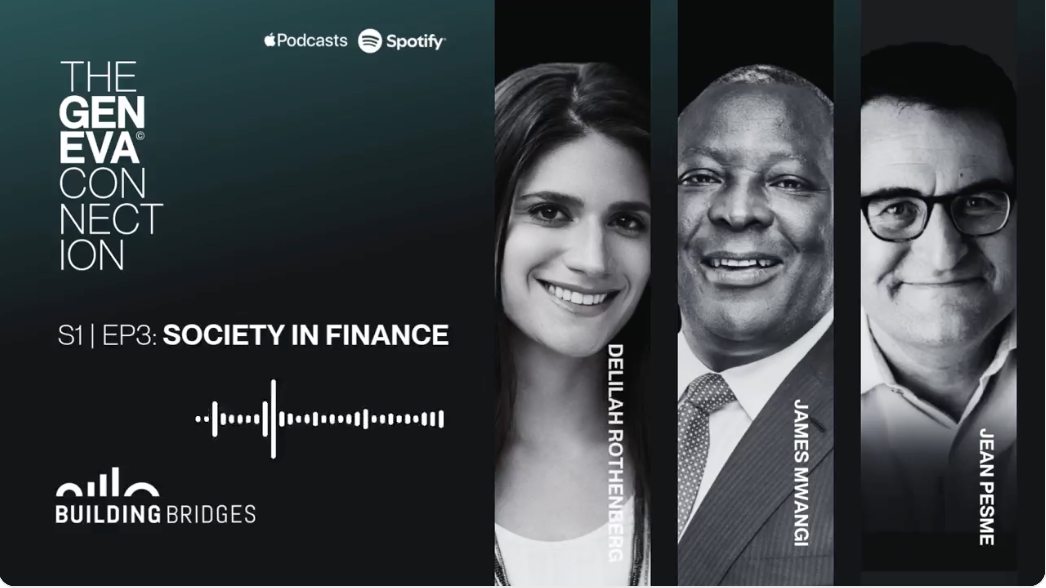
The Geneva Connection - Society in Finance: Bridging Gaps, Shaping Futures

Value Creation Through Responsible Investing: NYU Stern Center for Sustainable Business Private Equity Sustainability Practicum: Value Creation Through Responsible Investing

Virtual Launch of the Taskforce on Inequality and Social-Related Financial Disclosures (TISFD)

Perspectives on Workforce Directors: Opportunities & Challenges

Accelerator for Systemic Risk Assessment (ASRA)- From Multidimensional Challenges to Multidimensional Possibilities: Facing Global Risks Together

UNRISD - Opportunities and Challenges for Integrating Thresholds and Allocations into Measurement and Management Frameworks

The Mindful Marketplace: Neighborhood Economics - Redefining Wealth Distribution with Innovative Financial Models

American Evaluation Association's Social Impact Measurement Topical Interest Group: Using a system lens to assess impact